In recent years, solar street lights have gained popularity due to their energy efficiency and low maintenance. However, many users face the frustrating issue of asking, "why are solar street lights not turning on at night?" This common problem can stem from various factors, including battery failure or inadequate sunlight exposure during the day.
Dr. Emily Chen, a renewable energy expert, notes, "Even the best solar street lights rely heavily on proper installation and sunlight." This emphasizes the importance of understanding both the technology and the conditions required for optimal performance. Without addressing these factors, the lights may not function as intended, leading to dissatisfaction among users.
It is vital to explore the underlying reasons for the failure of solar street lights. Are they properly positioned for optimal solar gain? Are the batteries maintained and functioning? By investigating these aspects, users can find practical solutions. We must reflect on our installation choices and daily maintenance to ensure that our solar street lights serve their purpose effectively.
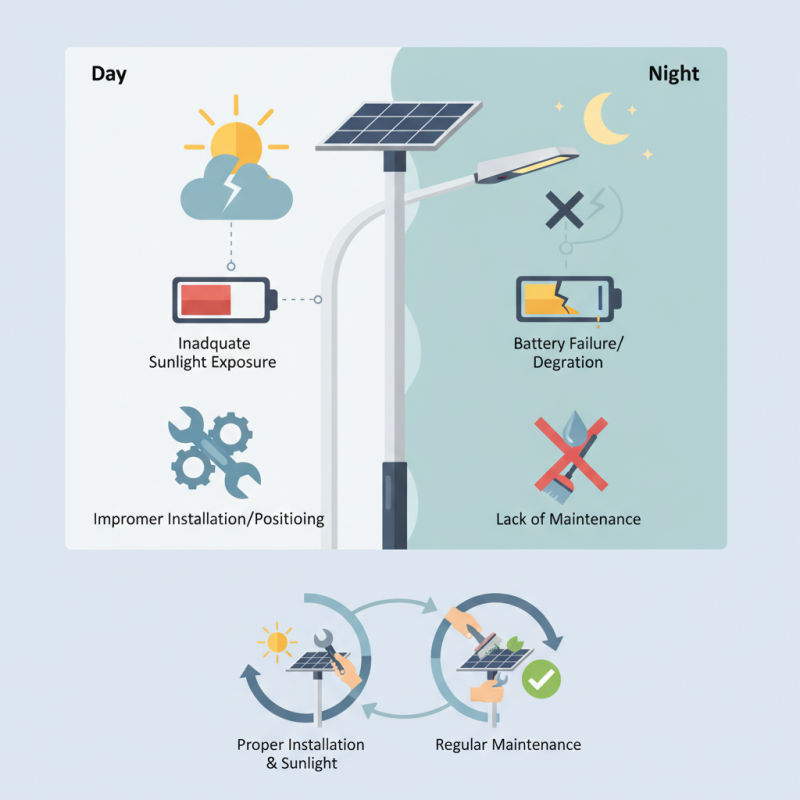
Solar street lights are a prominent solution for outdoor lighting. However, many users face issues when these lights fail to operate at night. Understanding the causes can help in troubleshooting and maintenance.
One common reason is inadequate sunlight during the day. Solar panels rely on sunlight to charge batteries. If panels are dirty or blocked, they will not absorb enough energy. Another issue could be battery failure. Over time, batteries degrade and may not hold a charge. This often leads to lights working poorly or not at all.
A third factor is improper installation. Solar lights need to be positioned for optimal sun exposure. If they are in shaded areas, they won’t receive enough light. Lastly, weather conditions can impact performance. Extended cloudy periods can reduce charging efficiency. Solar lights rely heavily on their environment. Regular checks and maintenance can mitigate most of these issues for better performance.
Solar street lights rely heavily on solar batteries for their nighttime operation. If these batteries fail to charge efficiently during the day, it results in inadequate lighting at night. One common issue is poor solar panel positioning. If panels are not angled properly, they may not receive enough sunlight. This can severely limit the energy stored in the battery.
Another factor is battery age and condition. As batteries degrade over time, their capacity diminishes. Many users are unaware that regular maintenance is crucial. It’s easy to overlook battery health until problems arise. Additionally, extreme weather conditions can impact battery performance. Cold temperatures can reduce efficiency, while excess heat may cause overcharging.
Environmental factors like dirt on solar panels can also hinder performance. Dust and debris block sunlight, affecting energy absorption. Regular cleaning can resolve this issue. It’s essential to assess these aspects periodically. Users often expect solar street lights to work flawlessly but may ignore underlying challenges. Understanding these issues can lead to better performance and reliability.
Solar street lights rely heavily on solar sensors to operate effectively at night. These sensors detect ambient light levels. They automatically trigger the lights when natural light diminishes. If a sensor malfunctions or is poorly calibrated, the lights may not activate as intended.
According to a report by the International Energy Agency, over 30% of solar street lights fail to operate consistently at night due to sensor issues. Factors like dirt, dust, and obstructions can impair sensor functionality. Regular maintenance is crucial to ensure sensors are clean and properly positioned. Some systems may not have the necessary sensitivity. This can lead to lights turning off too early or failing to activate at all.
It’s also important to consider power storage. Solar street lights depend on batteries charged during the day. If the battery is low, the lights may not work throughout the night. Data from the National Renewable Energy Laboratory indicates that improper battery sizing can lead to a decrease in nighttime performance. Proper planning and assessments are vital for reliable operation.
Solar street lights are increasingly popular for their sustainability and energy efficiency. However, they sometimes fail to
illuminate at night. Environmental factors play a critical role in this issue.
One significant factor is sunlight exposure. Solar panels require adequate sunlight to charge effectively. In areas with extended cloudy days or heavy rainfall, the energy stored can diminish quickly. Shadows from nearby buildings or trees can also reduce charging efficiency. Even dirt or dust on the panels can block sunlight. Regular maintenance is essential to ensure panels remain clean and unobstructed.
Temperature variations can impact the battery's performance. Extreme cold or heat may reduce efficiency. Batteries may not hold a charge as well in these conditions, leading to dim or non-functioning lights at night. Lastly, geographical location matters. Areas far from the equator experience shorter days in winter, which can limit solar charging time. Addressing these environmental factors is crucial for optimal performance.
Proper maintenance is crucial for solar street lights to function reliably at night. These systems rely heavily on solar panels, batteries, and LED technology. According to a report by the National Renewable Energy Laboratory, improper installation or maintenance can reduce efficiency by up to 30%. Keeping panels clean and free from debris can significantly enhance their ability to absorb sunlight, which is essential for nighttime operation.
Regularly inspecting the batteries is another key aspect of successful maintenance. Batteries should be tested annually to ensure they hold a charge effectively. Reports indicate that battery failure is a common cause of solar light malfunction. In some cases, faulty batteries can lead to a reduction in performance and premature system failure. Research suggests replacing batteries every three to five years depending on the usage and climate conditions.
Moreover, it's important to check the wiring and connections regularly. Corrosion or loose connections can disrupt the power flow, leading to erratic performance. A study by the International Energy Agency emphasizes the importance of routine checks. Neglecting these factors can result in inconsistent lighting that undermines the system's purpose. Clear documentation of maintenance activities can help track the performance trends and identify issues before they escalate.
| Issue | Description | Solution | Frequency of Maintenance |
|---|---|---|---|
| Battery Failure | Batteries not holding charge due to age or damage. | Check and replace batteries if needed. | Every 2 years |
| Insufficient Sunlight | Lights not receiving enough solar energy due to shading. | Trim surrounding trees and vegetation. | Seasonally |
| Faulty LED Lights | LEDs fail to illuminate due to manufacturing defects or wear. | Replace faulty LEDs. | As needed |
| Controller Malfunction | Solar controller not functioning, causing improper charging or lighting. | Inspect and replace the controller. | Annually |
| Wiring Issues | Damaged or corroded wiring affecting connectivity. | Inspect and repair any wiring issues. | Semi-annually |
: Inadequate sunlight during the day is a major cause. Dirty panels or shade reduce energy absorption.
Batteries degrade over time and may not hold a charge, leading to poor performance or total failure.
Solar sensors detect light levels. If they malfunction, the lights may not activate when needed.
Extended cloudy periods can decrease charging efficiency, impacting solar light performance.
Regular cleaning is essential. Debris can block sunlight, reducing the ability to charge effectively.
Batteries should be tested annually. It’s crucial to ensure they hold the charge properly for reliable use.
Corrosion or loose connections can disrupt power flow. This leads to erratic performance and inconsistent lighting.
Regular inspections and documentation of maintenance can help track performance and identify issues early.
Yes, if sensors lack sensitivity, they may not detect enough light. This can lead to premature shutdowns.
Check the panels, batteries, and sensors. These components often require maintenance to ensure proper operation.
Solar street lights are essential for nighttime visibility, but many users often wonder why are solar street lights not turning on at night. Several factors contribute to this issue. One common cause is the malfunction of solar batteries, which can lead to insufficient energy storage and impact overall performance. Additionally, the role of solar sensors is crucial; if these sensors fail, they may not detect darkness, preventing the lights from activating.
Environmental factors also play a significant role, as extreme temperatures or poor weather conditions can affect solar energy absorption and battery efficiency. To ensure optimal performance, regular maintenance is recommended, including cleaning solar panels and checking battery health. By addressing these common issues, users can enhance the functionality of their solar street lights and ensure they remain operational during the night.
