When considering lighting options, many wonder, "what is the difference between warm white and cool white?" This question touches on key elements of ambiance and functionality in any space. According to lighting designer Emily Schaffer, “Choosing the right color temperature can dramatically alter a room’s mood.” Hence, understanding these differences is crucial for homeowners or designers.
Warm white lighting emits a soft yellowish glow, fostering a cozy atmosphere. It works well in living rooms or bedrooms where relaxation is key. In contrast, cool white lighting provides a bright, bluish tint, ideal for task-oriented areas like kitchens or offices. This type enhances focus and productivity but can feel stark in more intimate settings.
Making the right choice involves personal preferences and specific room purposes. Some may prefer the tranquility of warm white, while others appreciate the clarity of cool white. However, one might reflect on how their lighting choices impact their daily feelings and interactions within a space. It’s worth pondering: does bright light elevate your energy, or does softer light bring peace? The distinction between these light temperatures is not merely aesthetic; it significantly influences our environments and emotional states.
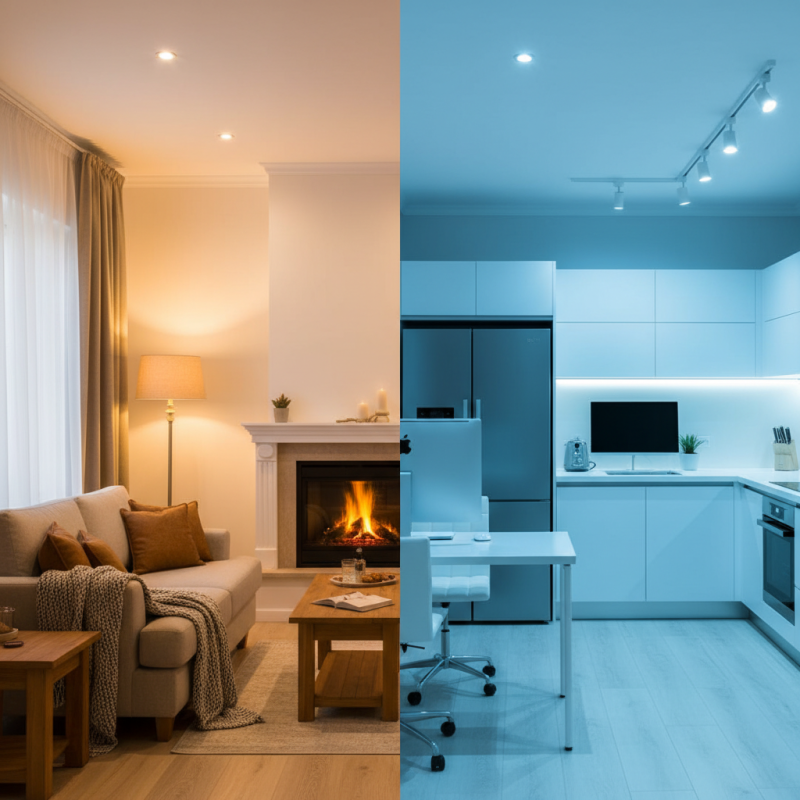
Understanding the Basics of Warm White and Cool White Lighting
When it comes to choosing lighting, understanding warm white and cool white is crucial.
Warm white light has a color temperature ranging from 2700K to 3000K. This type of lighting creates a cozy and inviting atmosphere.
It's perfect for living rooms and bedrooms, where comfort is key. According to a 2022 report by the Lighting Research Center, warm white lighting can reduce eye strain and enhance relaxation.
On the other hand, cool white lighting typically ranges from 3100K to 6000K. This light is brighter and more energizing,
making it suitable for workspaces and kitchens. A study from the American Psychological Association in 2021 indicated that cool white light can boost productivity and focus.
However, it may come off as harsh in a home setting.
Selecting the right lighting can be complex. The emotional impact of color temperature varies among individuals.
Factors such as room size, decor, and personal preference play a role in the decision. Some may find warm light too dim for specific tasks.
Others might feel cool light is overly sterile in an intimate setting. It's essential to test both types in your space to see what resonates comfortably.
The Impact of Color Temperature on Mood and Ambiance
Lighting plays a crucial role in setting the mood of a space. Warm white lighting tends to create a cozy, inviting atmosphere. It is often chosen for living rooms and bedrooms, where comfort is key. The soft glow of warm white can help people relax after a long day. It gives spaces a more intimate feel. However, this type of lighting may not be ideal for productivity.
On the other hand, cool white lighting promotes focus and clarity. It is perfect for workspaces and kitchens. The bright, crisp nature of cool white can enhance concentration. Yet, too much cool white can create a sterile environment. It may feel unwelcoming or harsh. Finding balance is essential.
When selecting between these two color temperatures, consider the emotional impact they may have. Warm and cool lights affect our mood differently. Experimenting with each type can lead to valuable insights. Observe how you feel in different lighting conditions. Reflecting on these experiences can guide your final decision.
Practical Applications: Where to Use Warm vs. Cool White Lighting
Choosing the right lighting can greatly influence the atmosphere of a space.
Warm white lighting,
typically between 2700K to 3000K,
creates a cozy and inviting environment. It's ideal for living rooms and bedrooms
where relaxation is the goal. In contrast, cool white lighting,
with a range of 4000K to 5000K,
offers a brighter and more energizing feel. This makes it perfect for kitchens and
bathrooms, where clarity and focus are essential.
Data from the Lighting Research Center
indicates that warm white lighting can enhance emotional comfort, which is crucial in
spaces meant for unwinding. Research also shows that cool white lights increase alertness
and concentration. When selecting lighting for workspaces, aiming for cool tones can
improve productivity. However, too much cool lighting can lead to feelings of
starkness or discomfort over time.
It's easy to overlook the effects of lighting on our daily activities. Many people
assume all light is the same, but this isn't true. Ambient lighting should suit its
function. If you feel drained in a space, reassessing light color might provide clarity.
Your choice influences not just aesthetics but also well-being. Reflect on which
environments need warmth and which require a cooler touch for optimal functioning.
Evaluating Energy Efficiency and Lifespan of Light Bulbs
Choosing the right lighting involves understanding energy efficiency and lifespan. Warm white lights give a cozy feel, while cool white enhances focus. However, their energy consumption varies significantly. LED bulbs, particularly in both categories, generally consume less power over time. They last much longer than traditional options. This longevity translates into less waste and lower energy bills.
When considering bulbs, reflect on their lifespan. Some bulbs may last only a year, while others can shine for over a decade. This longevity impacts not only your wallet but also the environment. It’s worth noting that not all brands offer the same quality. Reading reviews and checking energy ratings can help make informed choices.
Ultimately, assessing your needs is crucial. Warm lighting creates warmth in living spaces, which may encourage relaxation. Meanwhile, cool lighting suits task-oriented areas. The best choice depends on personal preferences and practical uses. Look for options that balance energy efficiency with your aesthetic needs.
Comparison of Warm White and Cool White Lighting
Personal Preferences: Choosing Based on Individual Lighting Needs
Choosing between warm white and cool white lighting often comes down to personal preferences. Warm white lighting emits a soft, yellowish hue. It creates a cozy atmosphere, perfect for living spaces and bedrooms. If you enjoy relaxing at home, this might be your go-to choice. Many people report feeling more comfortable and at ease under warmer lights.
On the other hand, cool white lighting offers a brighter, bluish tint. It's energizing and can enhance focus, making it ideal for workspaces and kitchens. If you find yourself needing to concentrate or feel more awake, cool white may suit you better. However, some individuals may feel harshness from cool tones, leading to eye strain over time. It’s essential to consider how each lighting type affects your mood and productivity, as personal needs vary widely. Experimenting with both can help identify which one truly resonates with you.
How to Choose Between Warm White and Cool White Lighting? - Personal Preferences: Choosing Based on Individual Lighting Needs
| Lighting Type |
Color Temperature (Kelvin) |
Best Use Cases |
Psychological Effects |
Energy Efficiency |
| Warm White |
2700K - 3000K |
Living rooms, bedrooms, restaurants |
Creates a cozy and inviting atmosphere |
Moderately energy-efficient |
| Cool White |
4000K - 5000K |
Kitchens, bathrooms, offices |
Promotes alertness and focus |
Generally energy-efficient |
| Daylight |
5000K - 6500K |
Workspaces, art studios, retail environments |
Enhances visibility and reduces eye strain |
Highly energy-efficient |
FAQS
: Warm white lighting, typically between 2700K to 3000K, creates a cozy and inviting environment.
Cool white lighting, ranging from 4000K to 5000K, is ideal for workspaces and kitchens that require focus.
Warm white lighting enhances emotional comfort and is great for spaces meant for relaxation, like bedrooms.
Yes, cool white lighting increases alertness and concentration, making it useful in work environments.
Consider the emotional impact, energy efficiency, and the specific function of the space you are lighting.
It influences not just aesthetics but also our well-being and energy levels in different environments.
LED bulbs generally consume less power and last significantly longer than traditional bulbs.
The lifespan affects both expenses and waste output. Some bulbs can last over a decade.
Reflect on personal preferences and the functional requirements of each space when selecting lighting.
Many assume all light is the same, overlooking the impact color temperature has on mood and atmosphere.
Conclusion
When considering what is the difference between warm white and cool white lighting, it's essential to understand the basics of color temperature. Warm white lighting typically ranges from 2700K to 3000K, creating a cozy and inviting atmosphere, ideal for living spaces. In contrast, cool white lighting, which ranges from 3500K to 5000K, offers a brighter, more energizing effect, suitable for workspaces or areas requiring focus.
Choosing between these two types of lighting involves evaluating their impact on mood and ambiance, as warm light can enhance relaxation while cool light may boost productivity. Additionally, practical applications guide where to best position each light type, depending on the environment. Factors like energy efficiency and bulb lifespan also play a role in decision-making. Ultimately, personal preferences and individual lighting needs should guide the selection process, ensuring that the chosen lighting enhances the intended space effectively.

