China Top 10 LED Light Suppliers Warm White vs Cool White?

Time:2026-09-22 Author:Sophia
0%

Choosing among China’s top 10 LED light suppliers requires more than comparing price, wattage, and warranty terms. Buyers must understand what is the difference between warm white and cool white before selecting products for homes, offices, hotels, or warehouses. Warm white usually ranges from 2,700K to 3,000K. It creates a soft, amber atmosphere, similar to an evening lamp. Cool white commonly ranges from 4,000K to 6,500K. It appears cleaner, brighter, and slightly bluish.

The IEA’s Lighting 2022 report identified LEDs as the dominant technology in global lighting sales. However, efficiency alone does not guarantee visual comfort. The CIE describes correlated colour temperature as a comparison with the colour appearance of a blackbody radiator. It does not fully describe colour quality, glare, or human response. That distinction matters.

Dr. Mariana Figueiro, a respected lighting researcher, has stated, “Light is the most powerful tool we have to affect our circadian rhythms.” Her observation supports careful use of cooler light during active hours and warmer light during evening periods. Still, this is not a perfect rule. Individual sensitivity, room surfaces, dimming, and exposure duration can change the experience.

A reliable supplier should provide CCT tolerance, CRI data, photometric files, flicker measurements, and test reports. Look beyond attractive catalog photographs. A 3,000K bulb may feel comfortable in a bedroom but dull in a workshop. A 5,000K panel may improve visual clarity yet feel harsh in a restaurant. This guide compares leading Chinese LED suppliers through that practical lens, while acknowledging one uncomfortable truth: colour temperature labels simplify a more complicated lighting decision.
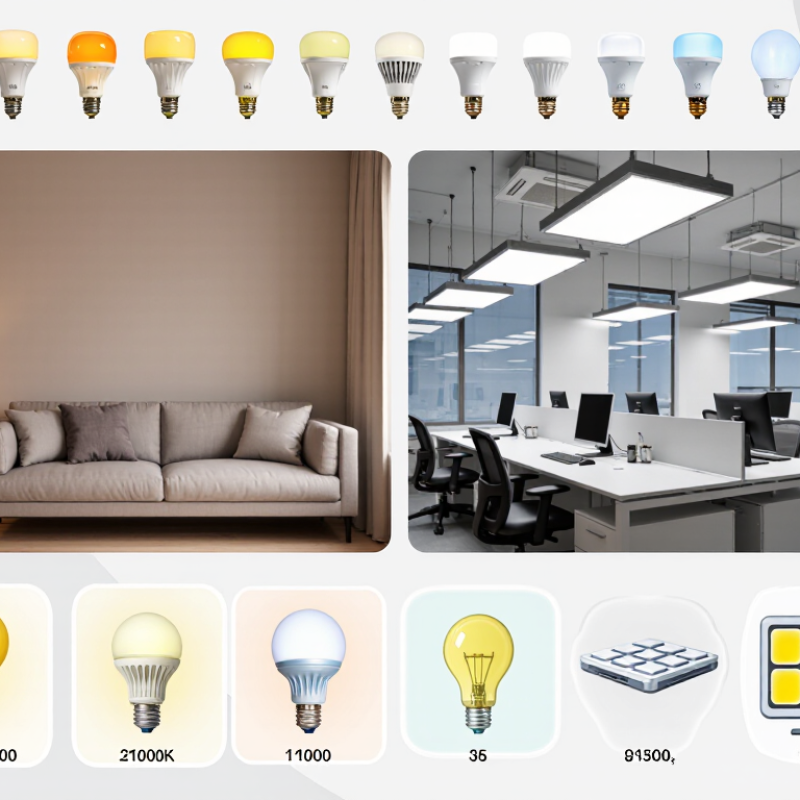
China Top 10 LED Light Suppliers Warm White vs Cool White?

LED Color Temperature: Warm White and Cool White Explained

LED Color Temperature: Warm White and Cool White Explained

Color temperature describes the visual tone of LED light, measured in Kelvin (K). Warm white usually ranges from 2700K to 3000K. It creates a soft, amber glow similar to an incandescent lamp. This tone suits bedrooms, restaurants, lounges, and wood-finished interiors. Cool white commonly ranges from 4000K to 6500K. It looks cleaner and slightly bluish, making it useful for offices, workshops, kitchens, and retail spaces.

Kelvin changes the mood.

In practical lighting projects, color temperature should match both the task and surrounding materials. A 3000K lamp can make cream walls look comfortable, while 6000K light may reveal details more clearly on a workbench. However, cool white is not automatically brighter. Brightness depends mainly on lumens, beam angle, and room reflectance. I once selected a high-Kelvin lamp for a small office, expecting better focus. The space felt harsh instead, and employees complained about glare. That decision needed more testing.

When comparing LED suppliers in China, request samples with identical wattage and lumen ratings. Check the actual CCT tolerance, color rendering index, flicker performance, and dimming compatibility. A reliable supplier should provide test reports and explain differences between batches. Look for CRI 80 or higher for general areas, and consider CRI 90 for artwork, clothing, or food displays. Warm and cool samples should be viewed under the intended wall colors. Screens can mislead. One overlooked detail is housing temperature; poor heat control may shift color and shorten LED life.

How Warm White and Cool White LED Lighting Differ

China Top 10 LED Light Suppliers: Warm White vs Cool White

How Warm White and Cool White LED Lighting Differ

Warm white and cool white LED lighting create noticeably different environments. Warm white usually ranges from 2700K to 3300K, while cool white commonly begins around 4000K. The International Commission on Illumination classifies these color temperatures as distinct visual categories. Warm light resembles a sunset or candlelit room. It suits bedrooms, restaurants, lounges, and hospitality spaces. Cool light appears cleaner and more alert. It works well in workshops, offices, retail aisles, and inspection areas.

Color temperature does not determine quality alone. The U.S. Department of Energy’s Solid-State Lighting reports emphasize evaluating efficacy, color rendering, lifetime, and optical performance together. A 4000K lamp with an R9 value above zero can display red materials more naturally than a cheaper lamp with a higher stated color temperature. Check LM-79 photometric reports and LM-80 lifetime data before comparing suppliers.

Also inspect flicker measurements, beam angle, and color consistency. Small differences in SDCM can become obvious across a long ceiling. The International Energy Agency reported that LED products represented roughly half of global lighting sales in recent years. That growth encourages more choices, but it also creates confusing specifications.

I once preferred cool white for every work area; that was too simplistic. High brightness can still feel harsh on glossy surfaces. Warm white may improve comfort, yet reduce visual sharpness for detailed tasks. The best supplier should provide samples under real installation conditions, not only attractive catalog images.

Key Factors for Choosing the Right LED Color Temperature

Choosing the right LED color temperature starts with the room’s purpose, not supplier rankings. Warm white, usually 2700K to 3000K, creates a relaxed atmosphere. It suits bedrooms, restaurants, lounges, and wooden interiors. Cool white, commonly 5000K to 6500K, produces a sharper appearance. It can support workshops, warehouses, clinics, and detailed task areas. Neutral white, around 4000K, often balances comfort and visibility.

I have seen customers choose cool light for offices, then complain about glare and tired eyes. The mistake was not the LED itself. It was poor matching between brightness, wall color, and working hours. Check the color rendering index, especially when accurate product or skin colors matter. A CRI of 80 may suit general spaces, while higher values support retail, hospitality, and design work. Ask suppliers for test reports, flicker data, beam angles, and samples. Small samples reveal more than polished catalogs.

Consistency also matters when comparing LED suppliers in China. Request the same color temperature across multiple production batches. Slight shifts can make one section look yellow and another appear blue. Confirm the rated lifetime under realistic temperatures, not only laboratory conditions. Review warranty terms, electrical safety documentation, and independent laboratory results. Measure the room. Then test the lights during daytime and at night. A color temperature that looks perfect in a showroom may feel harsh in a smaller room. I still find this step easy to overlook.

China Top 10 LED Light Suppliers: Warm White vs Cool White

Warm white LEDs commonly range from 2,700–3,000 K and create a comfortable, residential atmosphere. Cool white LEDs commonly range from 5,000–6,500 K and provide a brighter, more alert appearance for offices, workshops, retail areas, and task lighting. The final visual effect also depends on CRI, optics, room surfaces, and installation conditions.

China’s Top 10 LED Light Suppliers Compared by Product Range

China’s Top 10 LED Light Suppliers Compared by Product Range

China’s leading LED light suppliers differ more by product coverage than by basic brightness. A useful comparison examines residential bulbs, downlights, panels, floodlights, streetlights, linear systems, strips, and smart controls. The IEA’s Energy Efficiency 2024 report estimates that LEDs represent roughly 70% of global lighting sales, increasing pressure on suppliers to offer complete portfolios.

Warm white products, usually 2700–3000K, suit bedrooms, hotels, and restaurants. Cool white products, commonly 4000–6500K, support offices, workshops, warehouses, and outdoor visibility. The strongest suppliers provide both options, plus tunable-white models and several color-rendering levels. They also publish lumen output, beam angle, power factor, lifetime testing, and photometric files. The DesignLights Consortium’s SSL Technical Requirements emphasize verified performance, not attractive catalog claims alone.

Product range still needs careful checking. Some suppliers list many fixtures but rely on similar internal modules. Others offer fewer designs with stronger customization, such as emergency versions, sensor control, or project-specific housings. That difference matters. I have found that a wide catalog does not always mean better engineering. Reported lifetime can also change with temperature, driver quality, and installation conditions. Comparing test reports against CIE color standards creates a more reliable view than comparing warm white and cool white photographs.

China Top 10 LED Light Suppliers Warm White vs Cool White? - China’s Top 10 LED Light Suppliers Compared by Product Range
Supplier Profile Core Product Range Warm White Availability Cool White Availability Common CCT Options Typical CRI Range Typical Efficacy Common Protection Ratings Customization Capability Best-Fit Applications
Supplier Profile 01 LED bulbs Downlights Panel lights Floodlights Strong Strong 2700K, 3000K, 4000K, 5000K, 6500K 80–90 90–130 lm/W IP20, IP44, IP65 Housing color, beam angle, wattage, plug and driver options Residential, retail, offices and general outdoor lighting
Supplier Profile 02 LED strips Linear fixtures Profiles Controllers Very strong Strong 2200K, 2700K, 3000K, 4000K, 6000K 80–95 80–150 lm/W IP20, IP65, IP67 LED density, length, PCB width, dimming, CCT and RGB options Architectural accents, hospitality, cabinets and signage
Supplier Profile 03 Streetlights High bays Floodlights Tunnel lights Available Very strong 3000K, 4000K, 5000K, 5700K, 6500K 70–80 130–190 lm/W IP65, IP66, IK08–IK10 Optical distribution, photocell, dimming interface and surge protection Roads, warehouses, factories, parking areas and sports facilities
Supplier Profile 04 Commercial panels Troffers Downlights Emergency lights Strong Strong 3000K, 3500K, 4000K, 5000K, 6500K 80–90 95–140 lm/W IP20, IP44, IP54 Size, UGR lens, emergency battery, sensor and control-system integration Offices, schools, hospitals and commercial buildings
Supplier Profile 05 Garden lights Wall lights Bollards Landscape spotlights Very strong Moderate 2700K, 3000K, 4000K, 5000K 80–90 70–120 lm/W IP54, IP65, IP66 Finish, mounting method, cable length, optics and integrated solar options Gardens, resorts, pathways, façades and residential exteriors
Supplier Profile 06 Industrial high bays Low bays Tri-proof lights Explosion-resistant options Available Very strong 3000K, 4000K, 5000K, 5700K, 6500K 80–90 120–180 lm/W IP65, IP66, IP67, IK08–IK10 Reflector type, sensor control, emergency function and mounting accessories Manufacturing plants, logistics centers, workshops and cold storage
Supplier Profile 07 Decorative fixtures Pendant lights Track lights Magnetic systems Very strong Available 2700K, 3000K, 3500K, 4000K 90–97 75–115 lm/W IP20, IP44 CRI level, finish, track length, beam angle, dimming and smart-control options Hotels, restaurants, showrooms, galleries and luxury residences
Supplier Profile 08 Solar streetlights Solar floodlights All-in-one systems Off-grid lighting Available Strong 3000K, 4000K, 5000K, 5700K, 6500K 70–80 100–170 lm/W IP65, IP66, IK08 Battery capacity, solar-panel size, operating profile, motion sensor and remote monitoring Rural roads, parks, pathways, security areas and remote sites
Supplier Profile 09 Retail tracklights Spotlights Recessed lights Display lighting Strong Strong 2700K, 3000K, 3500K, 4000K, 5000K 90–98 80–125 lm/W IP20, IP44 Beam angle, CRI, R9 performance, track adapter, finish and dimming method Retail stores, museums, jewelry shops and product-display areas
Supplier Profile 10 Smart bulbs Smart downlights Connected panels IoT controllers Tunable Tunable 2200K–6500K adjustable; fixed 2700K–6500K options 80–90 80–120 lm/W IP20, IP44, IP65 for selected models Wi-Fi, Bluetooth, Zigbee, DALI, motion sensing and app-based color-temperature control Smart homes, offices, hotels, apartments and energy-management projects
Warm white generally refers to 2700K–3000K, neutral white to approximately 3500K–4500K, and cool white to 5000K–6500K. Performance figures are representative industry ranges for comparable LED product categories; actual specifications vary by model, LED package, driver, optics and certification requirements.

Applications, Quality Standards, and Buying Tips for LED Lights

China Top 10 LED Light Suppliers: Warm White vs Cool White?

When comparing China’s top 10 LED light suppliers, color temperature should match the application. Warm white, usually 2700K–3000K, creates a soft atmosphere in bedrooms, restaurants, hotels, and living rooms. Cool white, commonly 4000K–6500K, improves visual clarity in workshops, warehouses, offices, and retail spaces. Neutral white, around 3500K–4000K, often works better in clinics and kitchens.

Do not judge products by brightness alone. Check lumen output, color rendering index, beam angle, flicker performance, power factor, and heat management. For demanding projects, request test data linked to LM-80 and TM-21 methods. Safety documentation may include IEC 60598, IEC 62471, CE, or RoHS compliance, depending on the destination market. An IP65 rating can help outdoors, but only when sealing and cable connections are also suitable.

Ask each supplier for samples before confirming a large order. Compare two lamps beside a white wall, then inspect color consistency after several hours. A high CRI number can still hide unpleasant color tones. I have seen attractive samples fail because their housings became too hot. Check warranty terms, driver replacement options, minimum order quantities, packaging, and delivery records. Suppliers should explain production controls, not only send polished photographs. One overlooked detail remains important: cool white can increase glare in reflective rooms, while warm white may reduce visual sharpness during detailed work.

FAQS

What does LED color temperature mean?

Color temperature describes how warm or cool LED light appears. It is measured in Kelvin. Warm light looks amber, while cool light appears cleaner and slightly bluish.

Where is warm white LED lighting most suitable?

Warm white usually ranges from 2700K to 3000K. It suits bedrooms, restaurants, lounges, hotels, and wood-finished rooms. Cream walls may look softer under 3000K lighting.

Where does cool white lighting work best?

Cool white commonly ranges from 4000K to 6500K. It supports offices, workshops, kitchens, warehouses, clinics, and detailed work areas. It can reveal small details on a workbench.

Is cool white always brighter than warm white?

No. Brightness mainly depends on lumens, beam angle, and room reflectance. A high-Kelvin lamp may still feel dim in a dark room.

What is neutral white, and when should it be used?

Neutral white is around 4000K. It balances comfort and visibility. It often works well in offices, kitchens, corridors, and multipurpose rooms.

How should I compare LED lighting samples from suppliers?

Request samples with identical wattage and lumen ratings. Compare color temperature, color rendering, flicker, beam angle, and dimming performance. View them against the actual wall colors.

What color rendering level is suitable for different spaces?

CRI 80 or higher usually suits general areas. Consider CRI 90 for food, clothing, artwork, and accurate skin tones. Higher CRI can improve appearance, but it may affect cost.

What should I check beyond the LED color temperature?

Review heat control, driver quality, rated lifetime, warranty terms, and electrical safety documents. Ask for test reports and photometric files. Catalog photographs can mislead.

Why can identical LED fixtures look different after installation?

Production batches may have slight color shifts. Wall colors, room size, operating temperature, and nearby materials also change the visual result. I sometimes overlook batch consistency, and that causes avoidable rework.

Conclusion

This guide explains LED color temperature and helps readers understand what is the difference between warm white and cool white. Warm white LED light produces a soft, yellowish glow that creates a comfortable and relaxing atmosphere, making it suitable for bedrooms, living rooms, restaurants, and hospitality spaces. Cool white LED light appears brighter and more neutral or slightly bluish, supporting visibility and concentration in offices, workshops, retail areas, kitchens, and outdoor applications. The article also examines how brightness, room function, color rendering, energy efficiency, beam angle, and personal preference influence the best color-temperature choice.

It further compares China’s top 10 LED light suppliers by product range, customization options, manufacturing capability, quality control, certifications, and after-sales support, without focusing on brand promotion. Readers will also find practical buying tips, including checking product specifications, lifespan, safety standards, warranty terms, and consistency between batches. By considering both technical performance and intended use, buyers can select LED lighting that balances comfort, appearance, reliability, and value.

Sophia

Sophia

Sophia is a dedicated marketing professional with an exceptional depth of knowledge about her company's products and services. With a keen understanding of market trends and customer needs, she crafts insightful blog posts that not only inform but also engage readers, enriching the company’s online......